
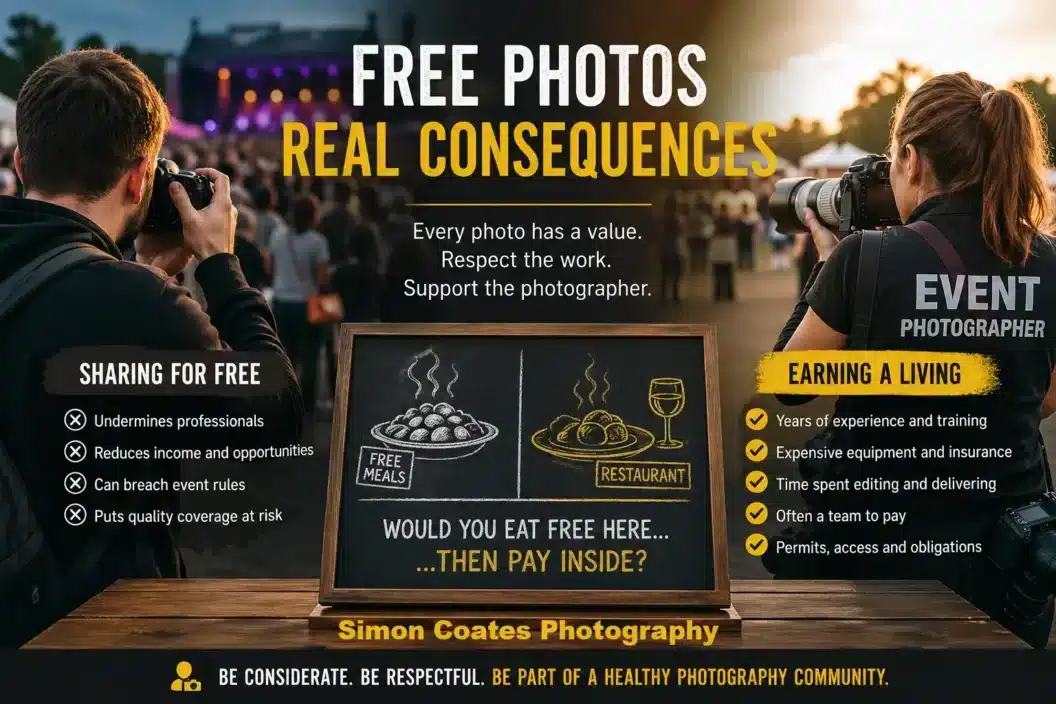
There’s a familiar pattern that plays out at local events, sports days, festivals, and community gatherings. A professional photographer is there, hired (or self-funded) to cover the event, carefully capturing, editing, and later selling images to participants. At the same time, a well-meaning hobby photographer is also present—camera in hand, enthusiasm high—and later shares their images online for free.
On the surface, it feels generous. Community-minded. Harmless, even.
But it isn’t.
The Reality Behind “Free”
Professional photography isn’t just about pressing a shutter button. It’s a business. Behind every image is time, experience, expensive equipment, editing hours, insurance, travel, and often years of skill development. When a professional covers an event, they are doing so to earn a living—not to “cash in,” but to sustain their work.
And in many cases, there are additional costs that aren’t immediately visible. Larger events often require second shooters, assistants, editors, or on-site staff to manage logistics and sales. Those people need to be paid. There may also be licensing fees, access permits, or agreements with event organisers. All of this is built into the professional’s ability to deliver a consistent, high-quality service.
When free images flood the same space, it directly undermines that livelihood—and the team supporting it.
The Reality of Private Events and Access Rights
Another point that often gets overlooked is where these events are taking place.
Many events—especially sports fixtures, ticketed festivals, and organised gatherings—are held on private land. That means access is controlled, and photography is often subject to terms set by the organiser. In some cases, the professional photographer has been granted specific permission or exclusive rights to cover the event commercially.
As a hobbyist attendee, you don’t automatically have the same rights.
Taking photos for personal use is sometimes tolerated, but distributing them publicly—especially in a way that competes with an authorised photographer—can put you on shaky ground. At worst, it may breach event terms or usage agreements; at best, it undermines arrangements that the organiser has put in place.
It’s not just about etiquette—it can also be about permission.
The “Better Photos” Argument Falls Apart
A common justification is:
“If the professional’s work is better, people will still buy it.”
That sounds logical, but human behavior doesn’t work that way.
Imagine this scenario:
An amateur chef sets up a table outside a restaurant and starts giving away free meals. The food isn’t as refined, the ingredients aren’t as high quality, and the presentation isn’t as polished—but it’s still food.
Now ask yourself: how many people are going to walk past that free meal and then go inside to pay for a better one?
Some will—but most won’t.
The same applies to photography. Once someone has a usable image—something they can post, share, or keep—they often feel no need to purchase a higher-quality version. The “gap” in quality doesn’t matter as much as we like to think.
Intent Doesn’t Cancel Impact
Most hobby photographers who share images for free aren’t trying to harm anyone. They’re passionate, generous, and excited to contribute. That’s a good thing.
But good intentions don’t erase real consequences.
If a professional photographer cannot make sales because the market has already been satisfied—for free—they may simply stop covering those events. And when that happens, the overall quality, consistency, and reliability of event coverage often drops.
In the long run, everyone loses.
Respecting the Ecosystem
Photography communities thrive when there’s room for both professionals and hobbyists—but that balance depends on mutual respect.
If you’re attending an event where a professional is clearly working:
-
Enjoy the experience of shooting, but be mindful of how you distribute your images.
-
Avoid uploading large galleries that directly compete with the professional’s offering.
-
Consider sharing selectively, or directing people toward the official photographer’s work.
-
Be aware of event rules and whether you actually have permission to publish images.
-
Ask yourself whether your actions support or undermine the creative ecosystem you’re part of.
A Simple Guiding Principle
Before sharing images from an event, ask:
“If I were trying to earn a living from this, would I be okay with someone doing what I’m about to do?”
If the answer is no, it’s worth reconsidering.
Final Thoughts
Photography is a wonderful hobby, and sharing your work can be incredibly rewarding. But context matters. When a professional is working, they aren’t just another person with a camera—they’re running a business, often with costs, obligations, and permissions that aren’t visible from the outside.
And businesses can’t survive on goodwill alone.
Supporting professionals doesn’t mean putting your camera away—it means understanding the impact of what you do next.